Office Furniture Oman
Office Furniture Oman: Ergonomic Desks and Chairs Guide
The best office furniture does more than fill a room. It supports posture, improves comfort, makes collaboration easier, and gives your workplace a professional identity. If you are planning a new office or upgrading an existing one, choosing the right office furniture in Oman should start with how people work every day, not just how the space looks in a catalogue.
Start with the way the team works
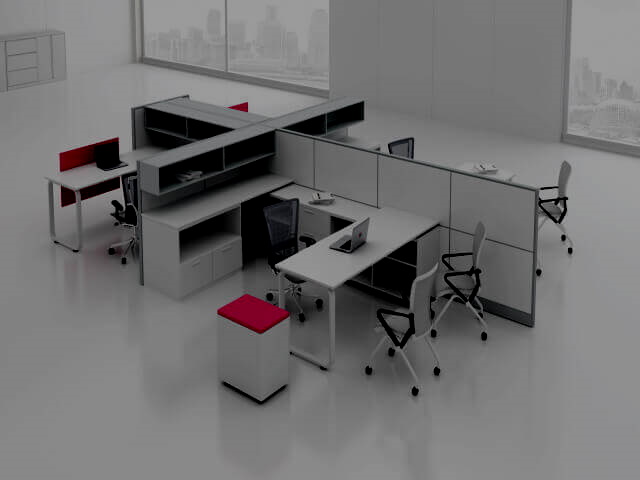
Before selecting desks or chairs, map out the daily routine of each team. Some roles are mostly focused and private, while others need easy movement between workstations, meeting rooms, and reception areas. A good furniture plan should support both concentration and collaboration. For example, a finance team may need quieter benching and storage, while a sales team may benefit from more open workstations and quick-access meeting spots.
When a project is planned around workflow, the furniture lasts longer in practical terms because it serves the real job the team is doing. That is one of the simplest ways to improve productivity without increasing floor area.
Choose ergonomic chairs that can be adjusted properly
Among all office furniture items, chairs have the greatest impact on comfort. A high-quality ergonomic office chair should allow height adjustment, lumbar support, and easy movement. Armrests should help the user relax the shoulders instead of forcing them into a rigid position. Seat depth matters too: if the seat is too deep, shorter users end up sitting forward; if it is too shallow, taller users lose thigh support.
For offices in Oman, breathable upholstery and durable finishes are worth considering because they hold up better in active environments and are easier to maintain. A well-chosen chair is not just a comfort item; it directly reduces fatigue during long workdays.
Quick checkpoint: chair support, desk height, monitor level, and cable control should be planned as one workstation system.
Select desks and workstations based on task type
Desks should be selected according to the job, the available floor space, and the equipment each person uses. Standard work desks are ideal for everyday computer-based work, but many offices also need executive desks, shared workstations, meeting tables, and collaboration points. A team that handles documents all day may need more surface area, while a design or technical team may need cable management and modular layouts.
- Use compact desks where circulation space is limited.
- Choose larger workstations for teams that need monitors, printers, or reference materials.
- Add storage pedestals and filing solutions to reduce clutter.
- Keep cable routes concealed to improve safety and presentation.
Match materials to traffic, maintenance, and brand image
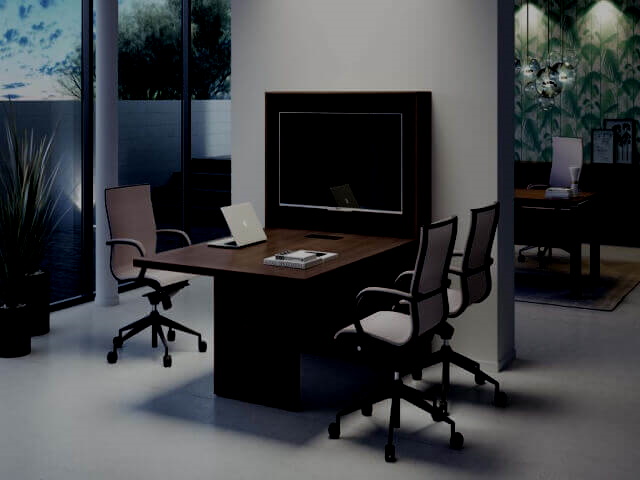
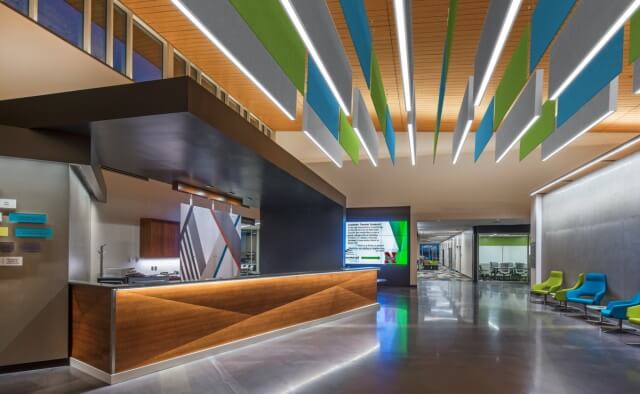
In commercial interiors, durability matters as much as appearance. Laminates, wood finishes, powder-coated frames, and high-wear upholstery are common choices because they perform well in busy offices. If the space is client-facing, the visual tone should also support the brand. A legal office may prefer darker wood tones and a formal look, while a modern startup may want lighter finishes and a more open feel.
Furniture is part of the first impression. Reception counters, meeting tables, and executive seating should look consistent with the rest of the workplace so the brand feels intentional, not assembled piece by piece.
Do not ignore storage and circulation
Many office fit-outs look good on day one but become cluttered quickly because there is not enough storage. Cabinets, shelving, mobile pedestals, and shared storage areas help keep documents and office supplies under control. Good circulation is just as important. People need clear routes between workstations, meeting rooms, and access points without bumping into furniture or blocking service areas.
A tidy office is easier to maintain, safer to use, and usually feels more premium to visitors. That is why storage planning should be part of the furniture decision, not an afterthought.
Common mistakes to avoid
The most common mistake is buying furniture based on appearance alone. Another mistake is choosing standard items without checking the actual dimensions of the room. Offices with low ceilings, narrow corridors, or shared collaboration areas need precise planning. It is also risky to choose low-cost furniture that looks acceptable in a showroom but wears out quickly in daily use.
If you are comparing office furniture suppliers in Oman, ask about installation, lead time, spare parts, warranty, and after-sales support. These details matter as much as the product itself.
Frequently asked questions
What is the best office chair for long hours?
An ergonomic chair with adjustable height, lumbar support, breathable materials, and proper armrests is usually the best choice for long working hours.
Should I buy modular workstations or individual desks?
Modular workstations are often better for growing teams, while individual desks can suit executive offices or teams that need more privacy.
How do I choose office furniture that lasts longer?
Focus on durable materials, reputable suppliers, correct sizing, and finishes that match the traffic level of your workspace.
Need help choosing office desks, chairs, or full workstation layouts for your project in Oman?
Request a consultation